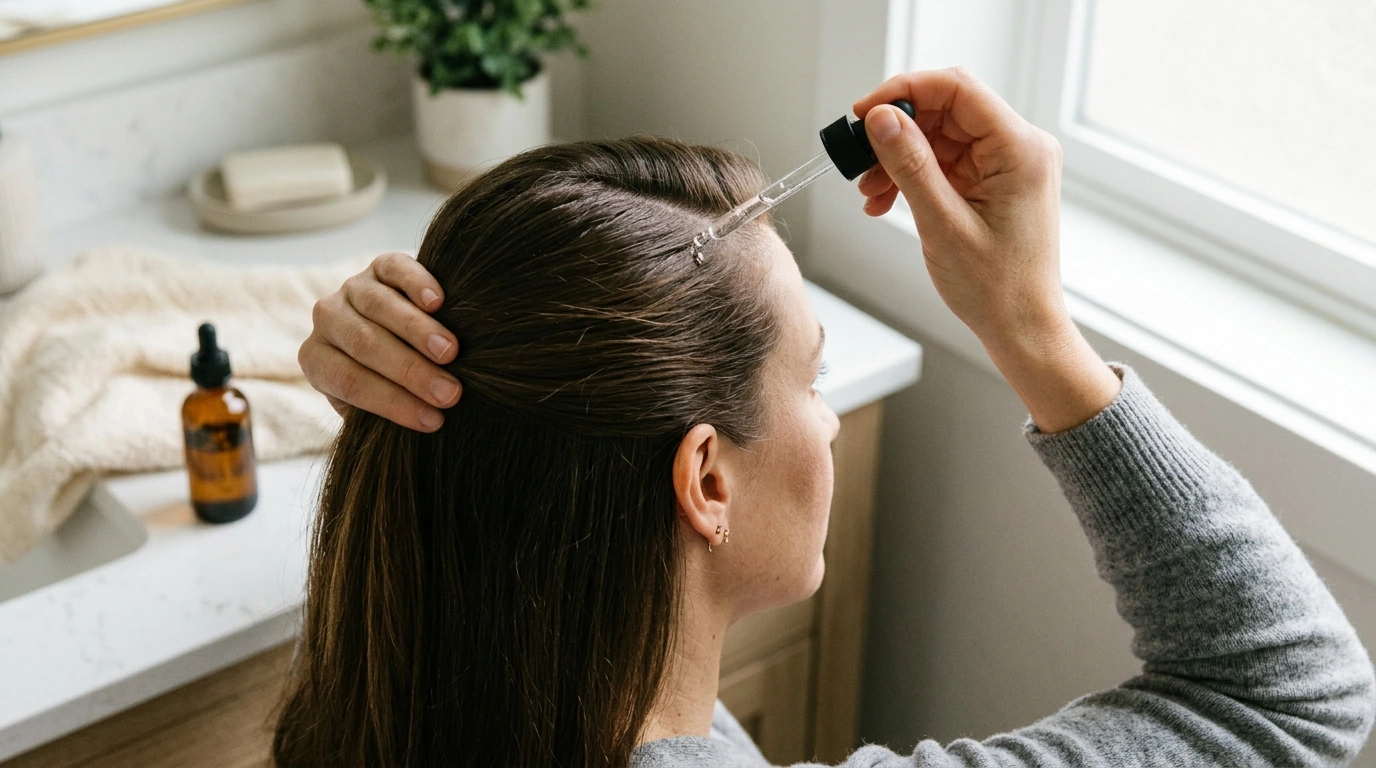
Stronger, healthier-looking hair usually comes down to consistency: supportive nutrition, a scalp-friendly routine, and ingredient choices that match the real reason hair feels thin, fragile, or slow to grow. Our team put this guide together to break down the most useful ingredient categories—what they do, where they show up (topical vs. supplement), and how you can build a simple plan without chasing hype.
Hair “growth problems” can look similar on the surface, but the drivers can be very different: temporary shedding, breakage from damage, nutrient gaps, hormonal shifts, inflammation, or scalp buildup. Ingredients that support hair growth typically help in one of three ways: they improve the scalp environment, support the follicle’s normal cycle, or reduce breakage so you retain length.
If shedding is sudden, patchy, painful, or paired with noticeable scalp scaling—or if it starts right after an illness or medication change—loop in a clinician. Ingredients help most when you understand what you’re treating; the American Academy of Dermatology is a helpful starting point for when to seek care (AAD hair loss overview).
Set a realistic timeline: hair cycles are slow. Many supportive ingredients need at least 8–12 weeks of consistent use before you can judge changes in shedding, comfort, and breakage.
Topicals won’t “force” hair to grow overnight, but the right actives can help your scalp feel calmer and more balanced, which makes it easier to stick with a routine.
Often used in scalp serums and shampoos to support the look of density. If you’re choosing between a rinse-off and a leave-on, leave-ons typically provide more contact time, which is what you’re paying for.
Supports the skin barrier and helps balance oil, which can make the scalp feel less reactive over time. It’s especially useful when itch, dryness, or general irritation is part of the picture.
A classic conditioning ingredient that helps hair feel smoother and more resilient. If your “growth issue” is actually breakage, panthenol can be a quiet workhorse because it supports softness and flexibility.
| Goal | Ingredients to Look For | Where They Show Up | Simple Use Tip |
|---|---|---|---|
| Reduce breakage and retain length | Hydrolyzed proteins, ceramides, panthenol, silicones | Conditioners, masks, leave-ins | Condition every wash; detangle gently with slip |
| Calm an irritated or dry scalp | Niacinamide, gentle surfactants, soothing humectants (aloe/glycerin) | Shampoos, scalp serums/tonics | Avoid harsh scrubs; focus on consistent, mild cleansing |
| Support dandruff-prone scalp | Ketoconazole (where appropriate) | Medicated shampoos | Use per label; alternate with a gentle shampoo |
| Add a “stimulating” scalp step | Caffeine; diluted rosemary or peppermint oil | Leave-on scalp products; carrier-oil blends | Apply to scalp consistently; patch test oils first |
| Support from the inside (when needed) | Protein, iron (if low), vitamin D (if low), zinc (balanced), omega-3s | Food; supplements | Test first when possible; avoid megadosing stacks |
Most people need at least 8–12 weeks of consistency to judge changes in shedding, scalp comfort, and breakage. Visible density changes can take longer because hair growth cycles move slowly.
They can be used safely when properly diluted in a carrier oil and patch tested first, but they’re not a “more is better” ingredient category. Avoid using them on irritated or broken skin, and stop right away if you get burning, itching, or a rash.
Biotin is most useful when you’re actually deficient, and many people don’t need high doses. It can also interfere with certain lab tests, so it’s smart to plan around bloodwork if your clinician advises it.






Leave a comment